
Teak vs Rattan Garden Furniture: Which Is Right for Your Garden?
Choosing new garden furniture often comes down to two popular options: teak and rattan.
Both can work beautifully in an outdoor space, but they offer very different looks, feel and maintenance requirements. Teak is a natural hardwood with a classic appearance, while outdoor rattan is typically made from synthetic woven fibres designed for outdoor use.
So, which one is right for your garden?
In this guide, we compare teak and rattan garden furniture to help you decide which material best suits your space, lifestyle and preferred style.
What Is Teak Garden Furniture?
Teak is a dense hardwood naturally rich in oils, which helps make it well suited to outdoor use.
It has a warm golden-brown appearance when new and gradually develops a silver-grey patina when left untreated outdoors.
At Garden Furniture Centre, our teak garden furniture range includes dining sets, benches, chairs, tables and other outdoor pieces. Our teak furniture is traditionally constructed with strong joinery and is designed for long-term outdoor use.
What Is Rattan Garden Furniture?
Traditional rattan is a natural material, but most modern outdoor rattan furniture uses a synthetic woven fibre.
This allows manufacturers to create the familiar woven appearance while improving resistance to moisture and everyday outdoor conditions.
Garden Furniture Centre's rattan garden furniture includes sofa sets, dining sets, modular furniture, loungers, daybeds and bar sets.
Our outdoor rattan collections use handwoven synthetic fibres designed specifically for outdoor use.
Teak vs Rattan: Appearance
The biggest difference between teak and rattan is their appearance.
Teak
Teak has a traditional, natural look that works particularly well in:
-
Country gardens
-
Cottage gardens
-
Large lawns
-
Traditional patios
-
Landscaped gardens
The grain and colour of the timber mean every piece has natural character.
Over time, untreated teak gradually changes from golden brown to silver-grey.
Rattan
Rattan creates a softer and often more contemporary appearance.
Its woven texture works particularly well with:
-
Modern patios
-
Conservatories
-
Contemporary gardens
-
Poolside areas
-
Outdoor lounges
Rattan furniture is also commonly paired with deep cushions, making it particularly suitable for relaxed seating areas.
Which Is More Durable: Teak or Rattan?
Both materials can be durable when you choose good-quality outdoor furniture.
Teak naturally contains oils that help it resist moisture and outdoor weather conditions. Good-quality teak is also resistant to rot, warping and splitting.
Outdoor synthetic rattan is manufactured specifically to cope with external conditions and can be resistant to moisture and UV exposure.
However, quality makes a significant difference with both materials.
A well-made teak dining set or premium outdoor rattan sofa should generally perform better over time than a cheaply manufactured alternative.
Which Requires Less Maintenance?
Both options are relatively easy to maintain, although the type of maintenance is different.
Caring for Teak
Teak does not normally require extensive maintenance.
If you are happy for it to develop a silver-grey patina, you can simply clean it occasionally with mild soapy water and a soft brush.
If you prefer the original golden appearance, additional cleaning and specialist teak treatments may be required.
You can also read our guide on how to clean teak garden furniture for more detailed advice.
Caring for Rattan
Synthetic rattan is also low maintenance.
Most everyday dirt can be removed using a soft cloth, brush or mild soapy water.
The woven design means dirt can occasionally collect between the fibres, so a soft brush can be useful for cleaning harder-to-reach areas.
Cushions may require slightly more attention than the rattan frame itself, particularly during wet weather.
Which Is More Comfortable?
Rattan often has the advantage when it comes to relaxed lounging.
Many rattan sofa sets and daybeds include deep seat and back cushions, creating an outdoor seating experience similar to an indoor sofa.
That makes rattan particularly popular for:
-
Relaxing
-
Socialising
-
Drinks with friends
-
Poolside seating
-
Outdoor lounges
Teak chairs and benches offer a firmer seating experience, although cushions can easily be added for additional comfort.
For outdoor dining, many people prefer teak because of its solid feel and traditional table-and-chair design.
Which Is Better for Outdoor Dining?
Both work well, but the experience is slightly different.
A teak dining set tends to create a more traditional outdoor dining area and works particularly well on larger patios and terraces.
Rattan dining sets often feel more relaxed and contemporary. Some designs combine dining-height tables with deep cushioned seating, allowing the same furniture to be used for meals and casual entertaining.
If you regularly host larger family meals, you may prefer a substantial teak dining table.
If you want a more informal space for drinks, meals and relaxing, a rattan dining set could be more suitable.
Which Is Better for Small Gardens?
Rattan can work particularly well in smaller spaces because many ranges include compact sofa sets and modular configurations.
Lightweight pieces can also be easier to reposition when you want to change your patio layout.
However, teak can also work well in smaller gardens.
Folding teak tables and chairs, small bistro-style sets and compact benches can provide practical seating without dominating the space.
The key is to measure your patio carefully before buying.
Which Works Better in a Traditional Garden?
Teak is often the natural choice for traditional garden settings.
Its timber finish complements lawns, mature planting, stone paving and established borders.
A teak bench positioned beneath a tree or overlooking a flower bed can become an attractive garden feature in its own right.
The appearance also changes naturally as the timber ages, helping it settle into its surroundings.
Which Works Better in a Modern Garden?
Rattan is particularly suited to contemporary outdoor spaces.
Its clean shapes and woven surfaces work well alongside modern paving, rendered walls, outdoor kitchens and minimalist planting.
Large modular rattan sofas can also help create the increasingly popular outdoor-living-room effect.
That said, modern teak collections can work equally well in contemporary gardens, particularly when timber is combined with metal, stone or neutral fabrics.
What Happens to Teak and Rattan in Winter?
Good-quality teak can generally remain outdoors throughout the year.
Its natural properties make it particularly well suited to changing outdoor conditions.
Outdoor synthetic rattan is also designed for external use, although cushions should normally be stored somewhere dry when they are not being used for extended periods.
A breathable furniture cover can provide additional protection for either material during long periods of poor weather.
Always ensure furniture is clean and dry before covering it.
Teak or Rattan: Which Is Easier to Move?
Rattan is generally the easier option if you regularly rearrange your garden.
Synthetic rattan furniture is often relatively lightweight compared with solid wooden furniture.
This can make it useful if you like changing your seating layout for different occasions.
Teak furniture can be heavier, particularly larger dining tables and benches, although this also gives it a reassuringly solid feel.
Can You Mix Teak and Rattan Furniture?
Absolutely.
You do not necessarily have to choose one material for the entire garden.
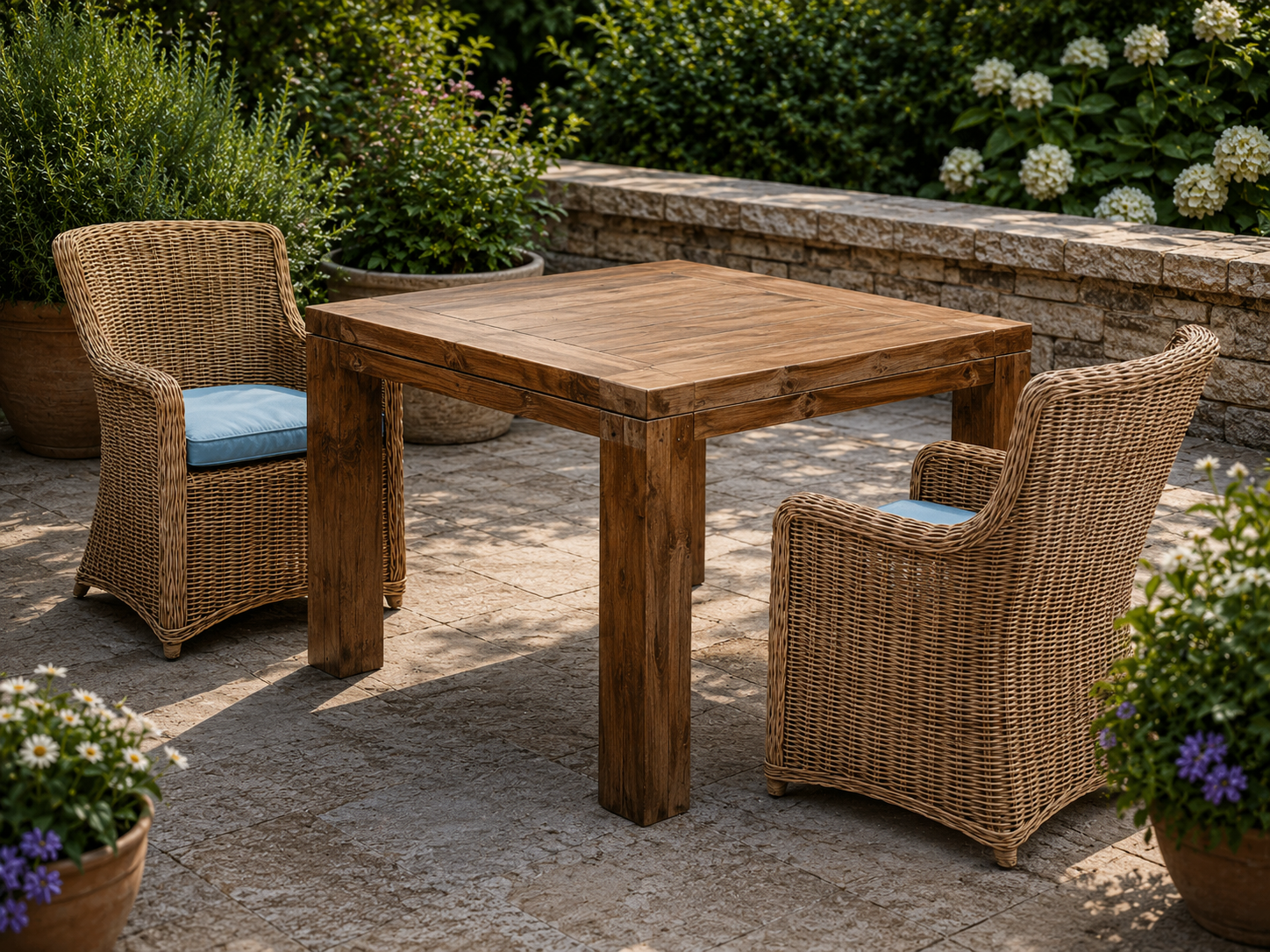
Teak and rattan can complement each other particularly well.
For example, you could combine:
-
A teak dining table with woven chairs
-
A rattan sofa area with a teak coffee table
-
Teak benches alongside contemporary lounge seating
-
Natural timber accessories within a rattan seating area
Garden Furniture Centre also offers outdoor furniture collections that combine teak and woven materials, giving you the benefits of both styles.
Teak vs Rattan at a Glance
| Feature | Teak | Rattan |
|---|---|---|
| Style | Natural and traditional | Contemporary and relaxed |
| Maintenance | Low | Low |
| Comfort | Firm, cushions optional | Often deep cushioned |
| Outdoor dining | Excellent | Excellent |
| Lounge seating | Good | Excellent |
| Easy to move | Moderate | Usually easier |
| Natural material | Yes | Usually synthetic outdoors |
| Changes appearance with age | Develops silver-grey patina | Generally retains its woven finish |
| Traditional gardens | Excellent | Good |
| Contemporary gardens | Excellent | Excellent |
So, Which Should You Choose?
Choose teak garden furniture if you prefer natural timber, traditional craftsmanship and furniture that develops character as it ages.
Choose rattan garden furniture if you want a softer, contemporary look with comfortable cushioned seating and flexible outdoor-living options.
For many gardens, the best solution can actually be a combination of the two.
A teak dining area paired with a separate rattan lounge set, for example, can create distinct spaces for eating and relaxing.
Ultimately, the right choice depends on how you use your garden.
Explore our full range of teak garden furniture and rattan garden furniture to find the style that works best for your outdoor space.